 EN
EN



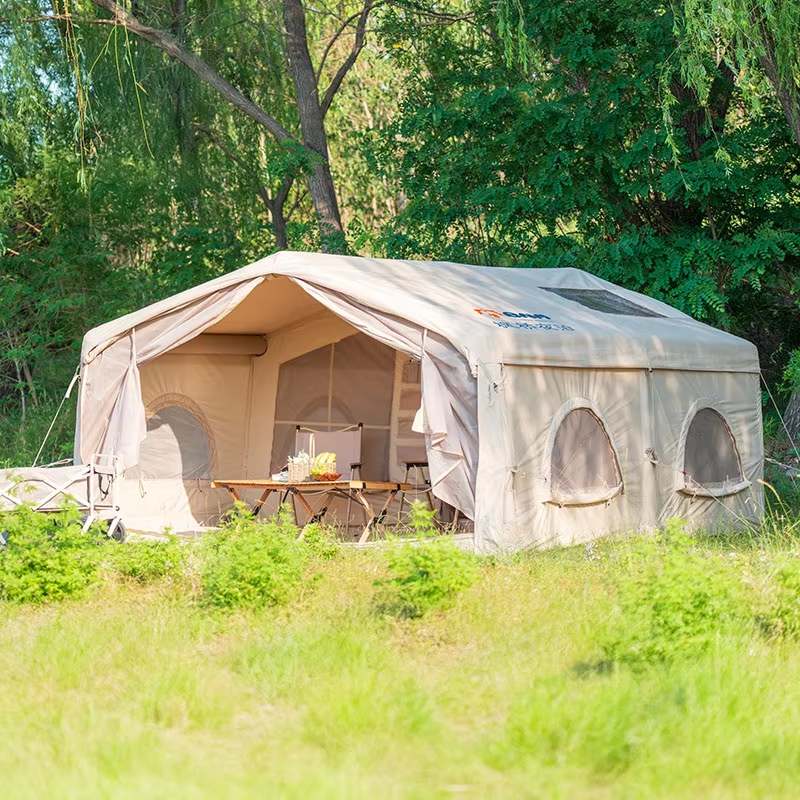
Navigating the Global Inflatable Tent Market
The popularity of the air beam technology has massively increased which has resulted in a saturated market. The problem facing B2B procurement managers in the UK, USA, Australia and Russia no longer lies in the ability to find a supplier but weeding out the manufacturers of the low quality of the so called disposable tents. A tent failure in a business context is a business day failure.
You have to look beyond the marketing photos in order to secure your investment and reputation of your brand. This is a guide on the technical requirements and red flags which professional buyers need to consider prior to entering into a high-volume purchase contract. In the case of MBNM outdoor, we feel that transparent buyer is our ideal partner.
1. The Material Litmus Test: TPU vs. PVC
The most prevalent cost-cutting technique in the business does not happen where the buyer can see, which is in the air beams.
The PVC Red Flag Numerous low cost manufactures of red flags use PVC as the inner bladders. PVC is weighty, smells of chemicals and above all, has low thermal memory. It stiffens in cold temperatures such as Canada and Russia and stretches in hot areas such as Australia and Spain, resulting to irreversible deformation.
The TPU Gold Standard This is always insistence on Polyethylene TPU. It weighs 30 percent less than PVC and it is environmentally friendly besides being elastic over a temperature span of 100 degrees. MBNM applies 0.3mm to 0.5mm TPU in order to come up with the ideal weight and structural rigidity.
2. Seam Integrity: Welded vs. Taped
A waterproof garment is of no use when its seams break. As a B2B buyer, inspecting a sample, it is necessary to pay attention to the "junctions."
The technology of Heat-Welding Heat-Welding is a high-quality inflatable tent in which the air beams and the floor-to-wall junctions are welded using a high-frequency (HF) welding. This is done by electromagnetic energy that is used to join the materials into one. An assembly that contains visible residual glue can be considered manual and of low quality, which will probably peel when subject to heat.
Reinforced Stress Points Check the ends and the junction of the airstreams and the canopy. Tents of professional quality include these points with the use of the so-called double-layer reinforcement. In MBNM, we attach an additional layer of 600D Oxford cloth to spread the tension and avoid tearing in the case of high winds.
3. The Valve and Pressure Management System
The main feature of an inflatable tent is the valve. The most common reason of slow leakages, which end-users are always annoyed about, is a cheap valve.
Inflation and Deflation Efficiency Search Boston high-flow valves or specialized valves, Braved. These must have a one-way diaphragm which does not allow the escape of air when the pump is not connected.
Over-Pressure Protection A safety relief valve is a non-negotiable provision when it comes to tents that are sold in areas with high solar gain. When a supplier is not in a position to provide a pressure-release mechanism, the tent will be a liability during the summer season where the air will expand rapidly within the beams.
4. Floor Durability and Bathtub Design
The pro camping business is where the ground is your greatest enemy. The ingress of water tends to occur at the bottom.
Material Density A good tent must have a 500D -1000D PVC or durable PE floor. It has to be much heavier and tougher than the fabric of the wall.
The Bathtub Height Make sure that the material used to wrap the floor raises at least 10-15cm up the wall before the seam commences. This bathtub shape makes the inside of the structure stay dry even when the water is standing or it is a flash flood. Floors are made of MBNM and they are welded to the structure to avoid leakages.
5. Documentation and After-Sales Support
In the case of B2B, a payment is made and the relationship starts after end of payment.
Certification Authenticity Does the manufacturer have the genuine ISO, CE and Fire Resistance (CPAI-84) certificates? The original PDF reports should be requested to meet international standards of compliance by the professional buyers.
Spare Parts and Repairability A professional supplier ought to provide repair kits (modular) and detachable TPU bladders. When the air beam is sewn into the tent, so that it is incapable of being replaced, the whole tent is a landfill in case of any puncture. MBNM are air beams that have zipper sleeves that are easy to maintain.
Conclusion: Choosing a Partner, Not Just a Vendor
The switch to inflatable outdoor equipment is a huge potential to expand in the outdoor industry. Nevertheless, many retail brands have been destroyed by the low-cost trap. By emphasizing on the quality of TPU, the accuracy of HF welding and safety certification, you are sure that your inventory will be converted into a long-term asset and not a short time pain.
At MBNM Outdoor, we have our backs to all the stitches, as well as to all the beams. We welcome B2B buyers to push us on our specs and find out why we are their preferred manufacturing partner to the most challenging outdoor brands in the world.